A new journey.
How Ancestry DNA led me down the path of discovery and possibility.
In 2024/5 I decided it was time to discover my ancestry. My Father was receiving treatment for his incurable cancer, and the two of us had always received comments or questions about our origins. Much to their dismay, my Father was born and raised in Devon, as was I. But I also have a large Scottish heritage from my Scottish Mother. I presumed that the results would be rather mundane and seamless, a 50/50 split of English and Scottish, with a bit of Cornwall or Northern Ireland in between. But something in me was always curious because of the comments and questions my father and I received. There must be something, something that people see that we do not. So, I spent £90 on an ancestry DNA kit and waited six weeks for the results.
What came back was more detailed than I could have imagined. I am more Celtic/Gaelic than I thought, with a small dash of Southern Ireland, Wales, England and Cornwall. But the other, more surprising links were those of my Nordic connections to Denmark and a surprising scatter in the Maghreb region. My DNA tracing back to Denmark was a surprise, but the more I thought it through, I am sure that is connected to my Maternal heritage. But the Maghreb region was a term I had honestly not come across before. Naturally, I turned to Google.
“The Maghreb, meaning 'the place where the sun sets' or 'the West' in Arabic, is a region of Northwest Africa that primarily comprises Algeria, Libya, Mauritania, Morocco, and Tunisia, along with the disputed territory of Western Sahara. Home to over 100 million people, it is defined by its deep historical, linguistic, and cultural ties bridging the Arab world, the indigenous Amazigh (Berber) populations, and Europe.”
Close to the border of the Maghreb region lies Egypt. A place that, even as a child, I was always profoundly fascinated with. Egyptology is my escapism; my interest in Tutankhamen and Cleopatra has never faded. I couldn’t wait to tell my Father, it was like a lightbulb moment, a moment of discovery. Even now, I am reading the book Cleopatra by Saara El-Arifi.
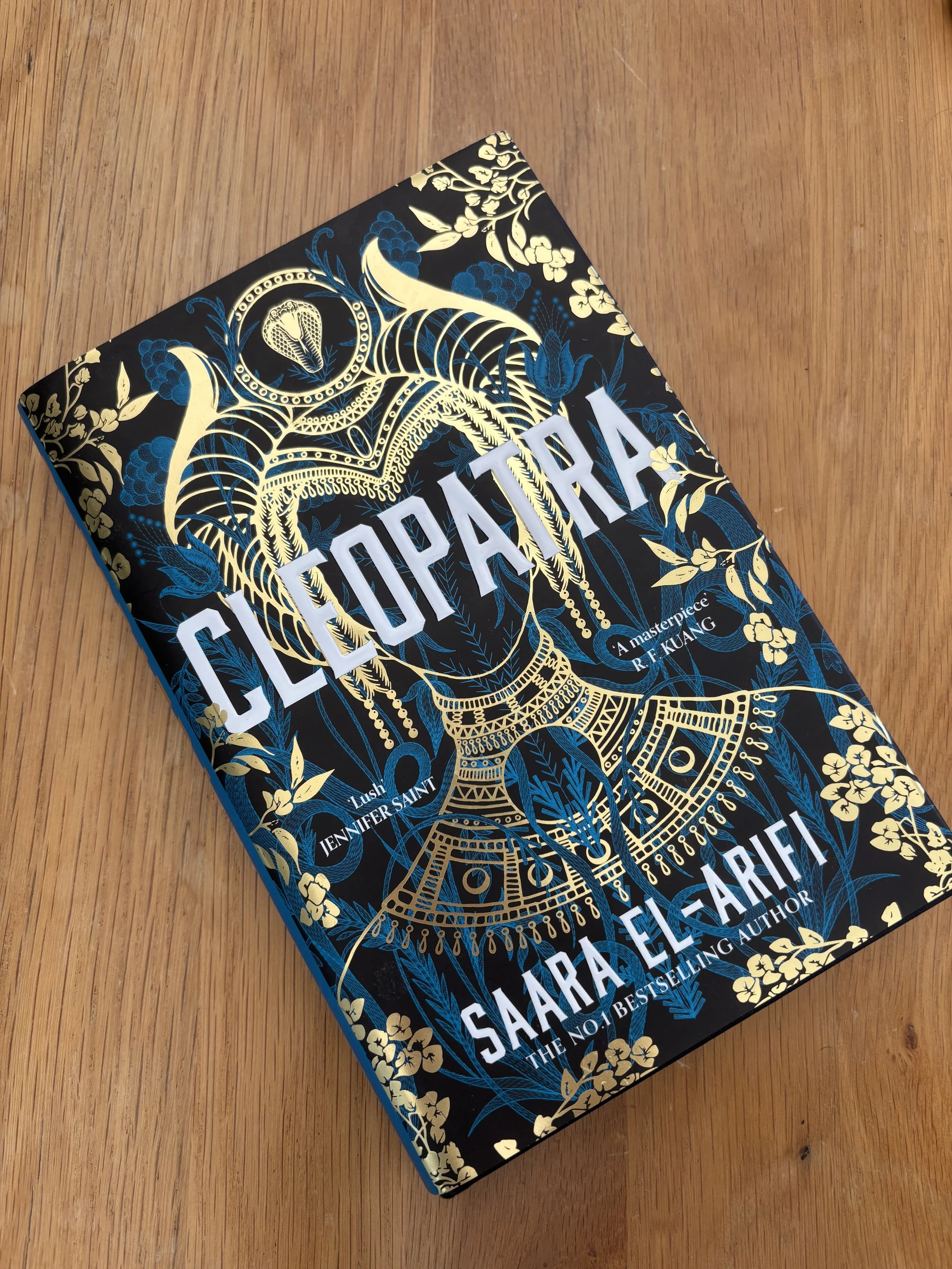
Cleopatra by Saara El-Arifi.
I spent the next few weeks and months, in between supporting my Father with his treatments, researching the Maghreb region, learning more about its culture, and the countries that sit between this region and its close cultural ties to Egypt itself. The Maghreb (Northwest Africa) and Egypt are historically and geographically linked but distinct regions. The Maghreb comprises Morocco, Algeria, Tunisia, Libya, and Mauritania, whereas Egypt lies in the east (Mashriq). Both are vital components of the MENA (Middle East and North Africa) zone.
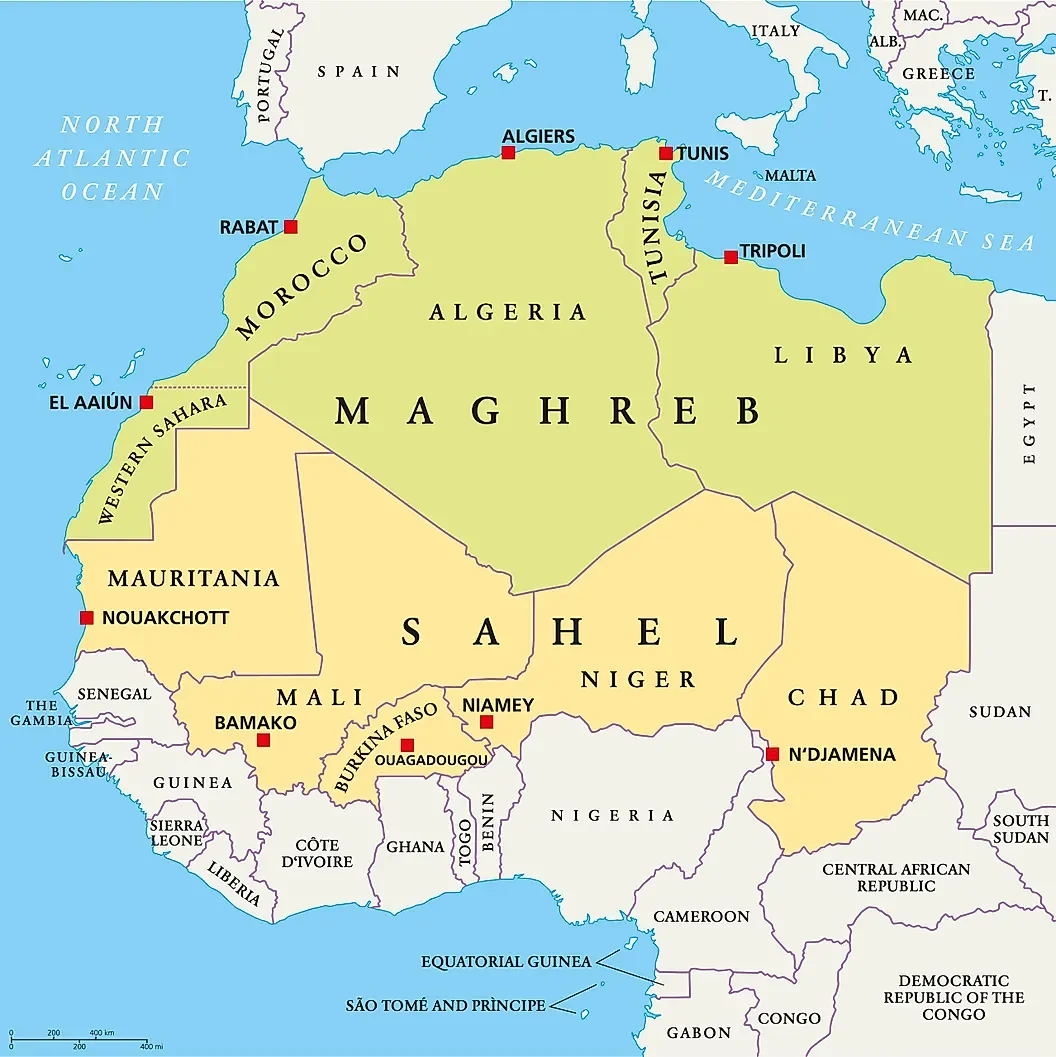
Maghreb Region, by the World Atlas. https://www.worldatlas.com/geography/maghreb-africa.html
I spent some time talking it through with my Father or thinking about it all on the long journeys to and from the hospital after work every night and in whatever spare time I could. And this is where the foundations formed to make it my research, to step into the unknown and follow my natural curiosity with my heritage and to connect it to my passion for typography. I even considered researching my Scottish routes and the many highland myths and legends that haunt the mountains and valleys. But, with my Dad and this close connection, I decided that the Magreb was the path for me. If only, to somehow even remain closer to my Father, who sadly passed away in March 2026.
This journey has inspired me to bring together two parts of my life that had previously existed separately: my interest in ancestry and my professional practice as a typographer. Rather than approaching ancient scripts as historical artefacts alone, I am interested in what they could teach us as designers today.
Previously, my research explored play theory and design-thinking methodologies, and I realised these ideas could offer an interesting way of engaging with ancient writing systems. Instead of simply analysing inscriptions, I want to experiment with them, treating them as living visual systems that could be explored, reinterpreted, and transformed through making.
With my research now underway in Springtime 2026, I am becoming particularly interested in Libyco-Berber inscriptions, early forms of Tifinagh, and Egyptian epigraphy. These writing systems contain distinctive geometries, symbols, and structures that continue to feel visually striking thousands of years after they were first created. Rather than reproducing them directly, I want to explore how their underlying principles can inform new typographic forms and visual approaches.
A key part of this process is risograph printing. Its layered colours, mechanical imperfections, and occasional misregistrations create unexpected outcomes that feel surprisingly connected to the material qualities of ancient inscriptions. The process encourages experimentation, allowing discoveries to emerge through making rather than through analysis alone.
Ultimately, this project is about curiosity, connection, and exploration. What began as a desire to better understand my ancestry has evolved into a creative investigation that brings together heritage, design, and personal memory. I do not yet know exactly where the research will lead, but that uncertainty is part of what makes the journey worthwhile. And I am only just getting started…
For you, Dad.
Love, your little Amy.
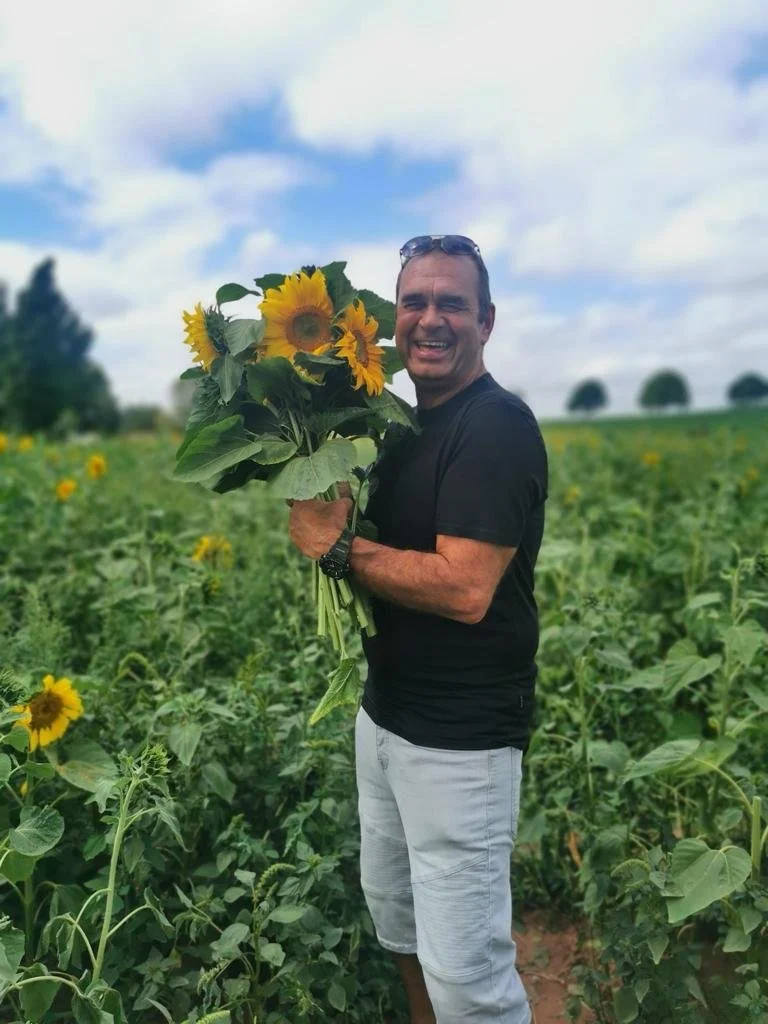
Keith Pike, 24th May, 1965 - 27th March, 2026.
